
Under Article 6(4) of the Industrial Property Law No. 6769, which entered into force on 10 January 2017, trademark applications that are identical or similar to well-known trademarks under Article 6 of the 1st Repeated Article 1 of the Paris Convention are rejected upon opposition in respect of identical or similar goods or services.
According to EU law, unfair exploitation (free-riding), damage to the distinctive character of the trademark (blurring) and damage to the reputation of the trademark (tarnishment) are referred to as cases of dilution.
In Turkish Law, the definition of dilution is not explicitly included in any legal text. However, in the established case law of the Court of Cassation, the definition of dilution is as follows: “The use of a trademark in more than one different trademark may lead to a decrease in the power and influence of the well-known trademark. This is called dilution of the trademark.” (Court of Cassation HGK, E. 2013/11-1885, K. 2015/1161 and T. 8.4.2015).
In this context, Article 6/5 of the Industrial Property Law No. 6769 constitutes the basis of the concept of dilution in Turkish Law; “In cases where an unfair benefit may be obtained, the reputation of the trademark may be damaged or its distinctive character may be damaged due to the level of recognition that a trademark that has been registered or whose application for registration has been filed at an earlier date has reached in Turkey, the application for registration of the same or similar trademark shall be rejected upon the objection of the owner of the trademark of the earlier date, regardless of whether the application is made for the same, similar or different goods or services, without prejudice to a justifiable reason.”
According to the aforementioned provision of the IPL; a trademark that has been registered or applied for registration at a previous date that has reached a certain level of recognition in society,
- will be able to gain an unfair advantage due to the level of recognition,
- can damage a brand’s reputation,
- may have consequences that may damage the distinctive character of the trademark.
the subsequent application will be rejected, even if it will be used for different goods and services.
In this case, the objector must prove, with the documents to be submitted in its opposition, the risk of unfair benefit from the trademark or the risk of damaging the reputation or distinctive character of the well-known trademark if the trademark applied for is registered. At the very least, it must be convinced that there is a serious risk in this regard. The determining factors for the existence of the risk include the degree of recognition of the claimant’s trademark, the degree of similarity between the marks, the connection between the goods and services covered by the marks, and the goods and services for which the claimant’s trademark has reached the level of recognition.
In this judgment, the Court of Justice has made important evaluations on the concept of dilution of a well-known trademark and the proof of this claim.
The facts of the case are as follows: On March 9, 2006, Environmental Manufacturing LLP (the applicant) applied to OHIM for registration of the following figurative mark.
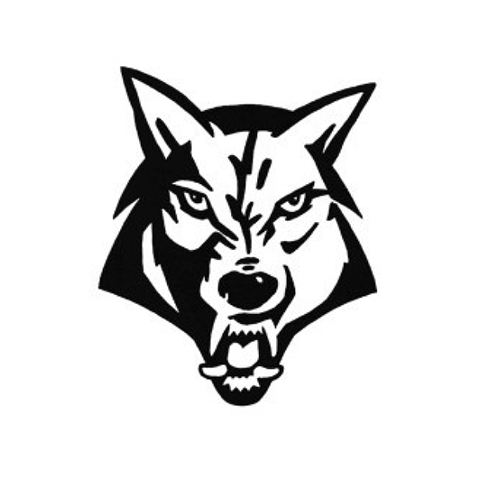
The following goods are included in the list of goods of the applicant: Class 7: machinery for professional and industrial processing of wood and green waste; professional and industrial wood chippers. The application was advertised in the Community Trade Mark Bulletin of September 18, 2006. On December 18, 2006, Societe Elmar Wolf (muteriz) filed an opposition to the advertisement of the application.
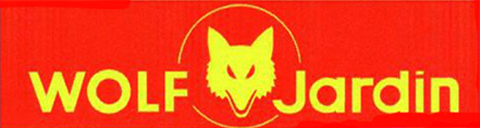
The opposition on the ground of the likelihood of confusion (Art. 8(1)(b) CTMR) was based on the following trademark “WOLF Jardin”, a figurative trademark registered in France on April 8, 1999, under number 99 786 007:
The figurative trademark “Outils WOLF” was registered in France on September 22, 1948, with number 1 480 873 and extended to Spain and Portugal through the Madrid Agreement:

Muteriz also invoked Article 8(5) CTMR as grounds for opposition because its trademarks were recognized in France for “motorized lawn mowers; mechanical tools and implements for lawn mowing, gardening and horticulture; hand-operated tools and implements” and “agricultural, horticultural and tillage implements”.
The OHIM Objections Unit concluded that there was no likelihood of confusion between the marks because, although the goods were identical, the marks were visually and aurally different and there was only a limited degree of conceptual similarity; it also found no merit to the objection in this respect, as no argument had been advanced by the authorizers that the conditions under CTMR 8(5) could be met, and dismissed the objection by its decision of 25 January 2010.
The appellant appealed against this decision and, upon appeal, the OHIM 2nd Board of Appeal, by Decision No. R425/2012-2 of October 6, 2010, reversed the decision of the Appeals Unit and upheld the opposition based on Article 8(5) CTMR. The decision held that the earlier marks were well-known in France, Spain and Portugal, that the disputed marks were similar to a certain extent, that the disputed goods were identical, that the opposer had put forward new arguments in support of its grounds of opposition and that these were admissible only to clarify the grounds relied on in the first opposition, the wolf’s head shape in the subject mark would bring to mind the distinctive and memorable element of the earlier marks and consumers might associate the marks with each other, with the result that the applicant’s trademark might unfairly benefit from the labour of the opposer; the use of the wolf’s head in the subject mark could dilute the distinctive and special image of the earlier marks, and without examining CTMR 8(1)(b), the opposition was justified under Article 8(5) and the application was refused.
The Turkish Patent and Trademark Office has accepted that the attempt to register the Johnnie Walker man walking with a cane logo for use in the fashion and textile sectors by changing the logo would lead to dilution of the logo. In a very recent decision, the Turkish Patent and Trademark Office’s Reexamination and Evaluation Board (“Board”) has accepted that the attempt to register the registered man walking with a cane logo, which is identified with the Johnnie Walker trademark, by a third party for use in the fashion and textile industry, creates the impression of a serial trademark and there is a possibility of diluting the man walking with a cane logo and damaging its distinctiveness and reputation, even if it is a well-known and registered trademark in the alcoholic beverages sector. On 28.02.2018, an application was filed before the Office for the registration of the trademark registered under number 2018/20205 on goods and services in classes 18, 25, 26 and 35, mainly for use in the fashion and textile sector. Diageo Brands B.V. has responded to this trademark application by submitting i) that the application should be registered in many countries, including Turkey, on alcoholic beverages in class 33. class 33 alcoholic beverages in many countries, including Turkey, i) The application is copied from the Johnnie Walker cane-walking man logo and the Jane Walker cane-walking woman logo, which was launched in March 2018 as a special edition of Johnnie Walker in a limited edition to celebrate Women’s Day and to promote gender equality, ii) the application infringes copyright in the Johnnie Walker cane-walking man logo, iii) the applicant seeks to register the mark in bad faith. Although the opposition to the application was initially rejected by the Trademarks Department, the objection filed before the Board against this rejection decision was accepted and the Board decided to reject the application in its decision dated 30.01.2019. Since the applicant did not file an action for annulment against this decision of the Board within the time limit, the decision has become final.
The Board firstly stated that the shape element in the application should be taken into account alone in the similarity assessment since it has a distinctiveness independent of the expression “maren moda”, and that this shape element is similar to the registered and well-known logo of a man walking with a walking stick, which is the ground of objection, to the extent of confusion, the gender of the figures of people walking with walking sticks, the heel of the boots, the shape of the hat, the shape of the glasses and the shape/length of the hair would not add distinctiveness to the application and would not eliminate the similarity between the trademarks.
In addition, the Board also implicitly implied that the applicant could not have filed the contested trademark application by chance, by stating that even if the logo of Jane Walker, a woman walking with a cane, is not used in Turkey, news about this trademark has been the subject of news in some Turkish-language internet news sites and the date of this news and the date of the contested application are very close to each other and even the date of some news and the date of the application are the same.
Finally, the Board considers that, due to the level of recognition and the intensive and widespread use of the Johnnie Walker man walking with a cane logo on alcoholic beverages, even though the scope of the subject application includes goods and services for a different sector, which is not similar to the alcoholic beverages sector in which the Applicant’s trademark is well-known, If the trademark subject to the application, which is similar to the logo of a man walking with a walking stick, is used concerning different goods and services, the distinctive power, uniqueness function and sphere of influence of this well-known logo may be weakened, and thus the distinctive character of the trademark may be damaged and diluted.
Significance of the Decision
This decision of the Board has a significant impact on compound trademarks that contain both word and shape elements. In this decision, the Board stated that the shape element in the trademark application subject to opposition should be taken into consideration in the evaluation of similarity and confusion, independently of the word element, and if the human figures that make up the shape element are of different genders, it should be accepted that there is a conceptual similarity between the trademarks and the impression of a serial trademark is created. In addition, this decision is also a precedent in terms of determining the protection to be provided to well-known trademarks, and it shows that the Board will not apply its strict perspective towards well-known trademarks, at least in terms of trademarks that have a long-term and intensive use both in Turkey and worldwide. Contrary to its recent decisions to the contrary, in this decision, the Board, considering the possibility of damaging the distinctive character and reputation of the well-known trademark and the possibility of dilution of the trademark, has made it clear that a trademark application for a trademark similar to a well-known trademark should not be used on goods and services in a different sector, even if the recognition of the trademark on which the opposition is based is specific to a certain sector (in our concrete case, the alcoholic beverage sector).